The right to education is a fundamental and inalienable human right, recognized globally in Article 26 of the Universal Declaration of Human Rights (UDHR), Article 13 of the International Covenant on Economic, Social and Cultural Rights (ICESCR), and Article 28 of the Convention on the Rights of the Child (CRC). Yet, in Iran, this right is being denied to millions of children and youth.
Despite the country’s considerable natural resources, including decades of oil revenues, millions of children remain excluded from education. Schools, which should serve as safe spaces for learning and growth, are becoming environments marked by poverty, exclusion, and repression.
Rising Dropout Rates and Widespread Illiteracy
The 2022–2023 academic year saw nearly one million students drop out of school, according to official figures. Some estimates place this number even higher, with representatives acknowledging that up to two million children may be out of school.
Worse still, illiteracy is alarmingly widespread, with approximately 18 million Iranians considered illiterate or semi-literate. The dropout rate is particularly acute among students aged 15–17, with over 556,000 teenagers leaving school. Even in primary education, the dropout rate has climbed, with 1.2% of students not completing basic schooling. Startlingly, 42% of children who finish primary school lack basic reading skills, according to internal research.
The Role of Poverty and Inequality
Economic hardship is the most significant barrier to education in Iran. With nearly five million children from low-income families unable to afford essential school supplies, education is increasingly out of reach. A basic school uniform now costs more than a week’s minimum wage—over 1.5 million tomans—placing further strain on families already struggling to survive.
The divide is sharp: while a small minority of students attend elite private schools charging up to 80 million tomans annually, public schools remain underfunded and overcrowded. Iran currently spends only about $300 per student per year, in contrast to the global average of over $9,000. As a result, education has become a privilege of the wealthy rather than a right for all.
Who Is Left Behind? Disproportionately Affected Groups
Certain vulnerable groups face even greater barriers to education:
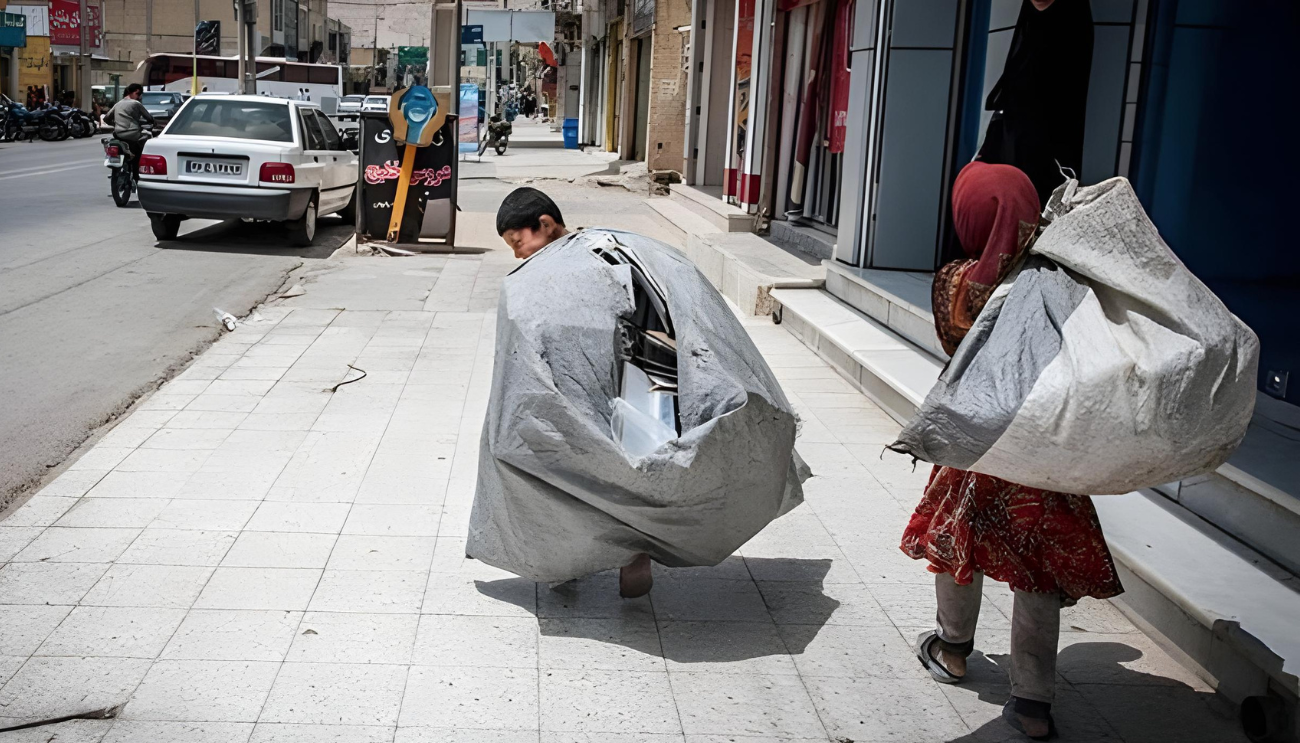
- Child laborers: Nearly half of all working children (48.7%) do not attend school. Many also suffer from chronic malnutrition.
- Girls and early marriage: Around 17% of women aged 20–24 were married before turning 18. Over a million girls under 18 have been forced into marriage in the past decade, with at least 15,000 giving birth before age 15. In provinces like Sistan and Baluchestan, 46% of girls drop out of school due to unsafe or inaccessible schools.
Religious minorities: Students from unrecognized faiths face systematic exclusion. In one documented year alone, dozens of students were expelled from universities solely due to their beliefs.
Afghan refugee children: While many have been allowed into public schools, infrastructure has not kept pace. The result is overcrowded classrooms and diminished educational quality.
Children with disabilities: Around 15% of school-age children with disabilities are entirely excluded from the education system, according to UNICEF.
Repression in Schools: From Classrooms to Prisons
Schools and universities have increasingly become spaces of surveillance and punishment. During recent nationwide protests in 2022–2023, thousands of students and educators were arrested. Official statements suggest that more than 90,000 students, teachers, and professors were detained in connection with peaceful demonstrations.
Tragically, children and youth were among those killed or mistreated. At least 78 children under 18 were among those confirmed dead, and others have been subjected to torture or arbitrary detention. Such treatment directly contravenes the Convention on the Rights of the Child, particularly Article 37, which prohibits torture and arbitrary detention of minors.
In a striking statement from prison, two imprisoned university students declared:
“If a prison cell can become a battlefield, so can a classroom.”
Their words reflect the chilling reality that for many Iranian students, the simple act of learning has become an act of resistance.
Education in Ruins: Infrastructure in Crisis
Iran’s educational infrastructure is crumbling. Over 100,000 classrooms are missing, and another 120,000 are considered unsafe. In the capital, 80% of schools reportedly fall below basic safety standards. In some areas, children attend classes in shipping containers or mud-brick buildings, exposed to the elements and health hazards.
Despite urgent needs, less than 3% of the education budget is spent on non-salary essentials like infrastructure. Of the $3 billion promised in 2017 for school renovation, only 1.4% was actually delivered. As a result, Iranian students continue to score among the lowest globally in international assessments.
Instead of addressing the crisis, authorities have prioritized policing schools—even formalizing partnerships with national security forces to monitor educational environments and interfere in curricula.
International Concern and Obligations
The global community has raised alarm over the state of education in Iran:
- UNICEF has consistently reported on the exclusion of over one million children, especially girls, child laborers, and children with disabilities.
- UNESCO has noted that Iran is not meeting its commitments under the “Education for All” framework, allocating less than 2% of GDP to education.
- The UN Committee on the Rights of the Child has condemned child marriage, the exclusion of refugee children, and the failure to ensure equal education access for all children.
These are not just policy shortcomings—they are violations of international legal obligations, including:
- UDHR (Art. 26) – Right to free and equal education.
- ICESCR (Art. 13) – Obligation to make education progressively free and accessible.
- CRC (Arts. 28, 37) – Right to education and protection from abuse and arbitrary detention.
- ICCPR (Arts. 6, 7, 19, 21) – Right to life, protection from torture, freedom of expression and assembly.
A Humanitarian Call to Action
The denial of education to millions of Iranian children is a humanitarian crisis and a devastating betrayal of future generations. It entrenches poverty, fuels inequality, and shatters the hopes of children who deserve a fair chance at life.
We urge UNICEF, the UN Human Rights Council, and the international community to:
- Recognize the education crisis in Iran as a critical human rights emergency.
- Press for an end to discrimination, repression, and the militarization of schools.
- Implement urgent aid programs for vulnerable children—including girls, minorities, child laborers, and children with disabilities.
Every child deserves access to safe, quality education—regardless of income, gender, faith, or nationality. Denying this right is not just a violation of international law; it is a moral failure that will echo for generations.
Let us act before another generation is lost.