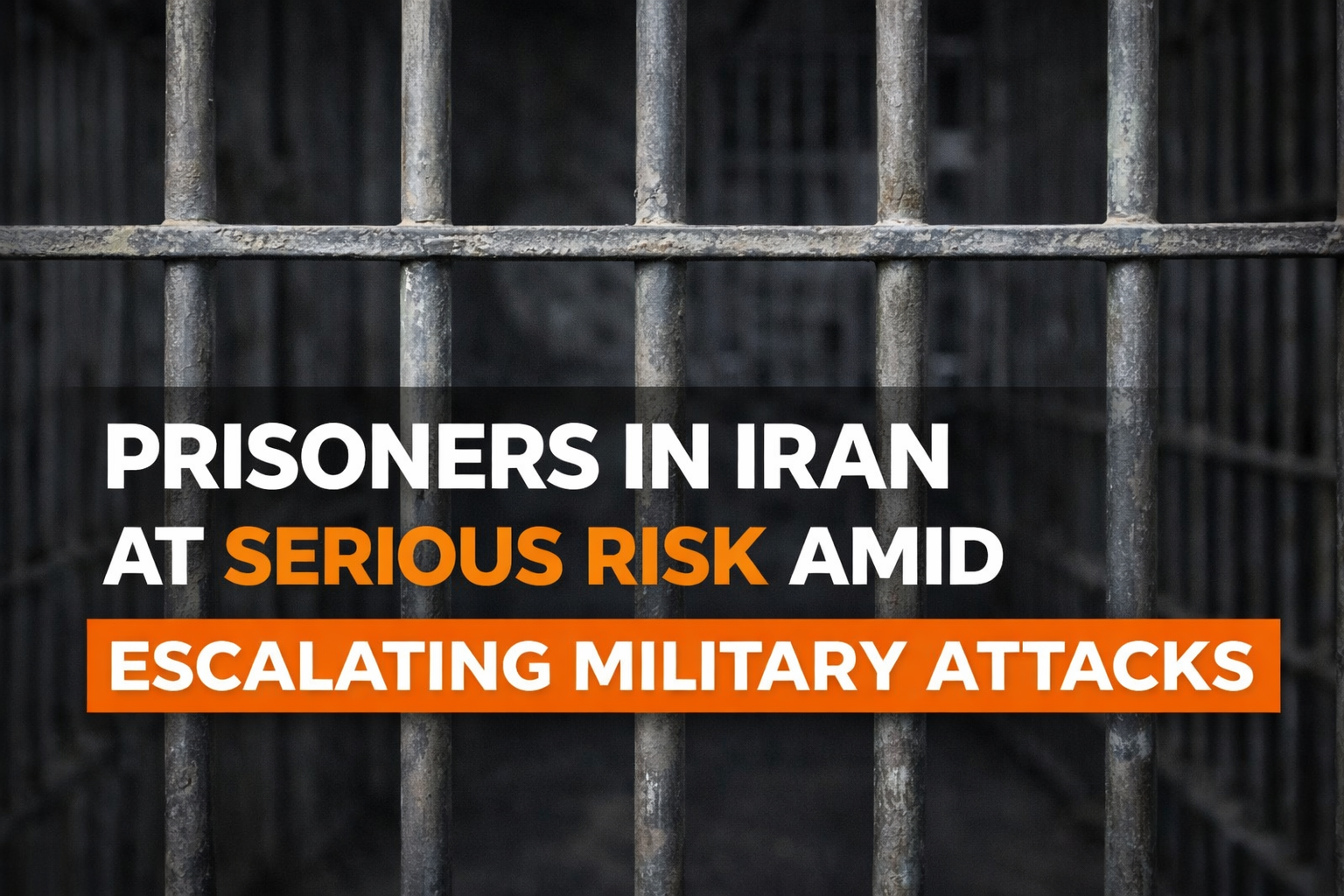
As military hostilities and aerial attacks threaten several Iranian cities, thousands of prisoners face increasing danger. Unlike the general population, detainees cannot flee conflict zones, seek safe shelter, or take steps to protect themselves. Their safety depends entirely on the authorities responsible for their custody. In overcrowded prisons with limited emergency infrastructure and restricted movement, armed conflict places prisoners in an extremely vulnerable position.
When prisons are located in cities exposed to military strikes, detainees can become trapped in environments where they have no control over their safety. Without preventive action, the combination of overcrowding, lack of adequate shelters, and limited evacuation possibilities could expose prisoners to severe harm.
Resolution No. 211 of the Supreme Judicial Council (1987) provides a framework specifically designed for emergency situations of this nature. The resolution requires authorities to urgently review the situation of detainees when war or security conditions place their lives at risk and to take appropriate measures to protect them.
Possible measures include temporary release of non-dangerous prisoners, conditional release, adjustment of bail arrangements, temporary leave, and the transfer of individuals to safer facilities. These steps are intended to reduce overcrowding and ensure that prisoners are not unnecessarily exposed to danger during periods of crisis.
In addition to domestic legal provisions, international humanitarian law obliges authorities to protect detainees during armed conflict. Under the Fourth Geneva Convention, individuals deprived of liberty must be treated humanely and protected from the effects of war.
Protecting prisoners in times of conflict is therefore not only a legal responsibility but a humanitarian necessity to safeguard human life.