September 21, 2025
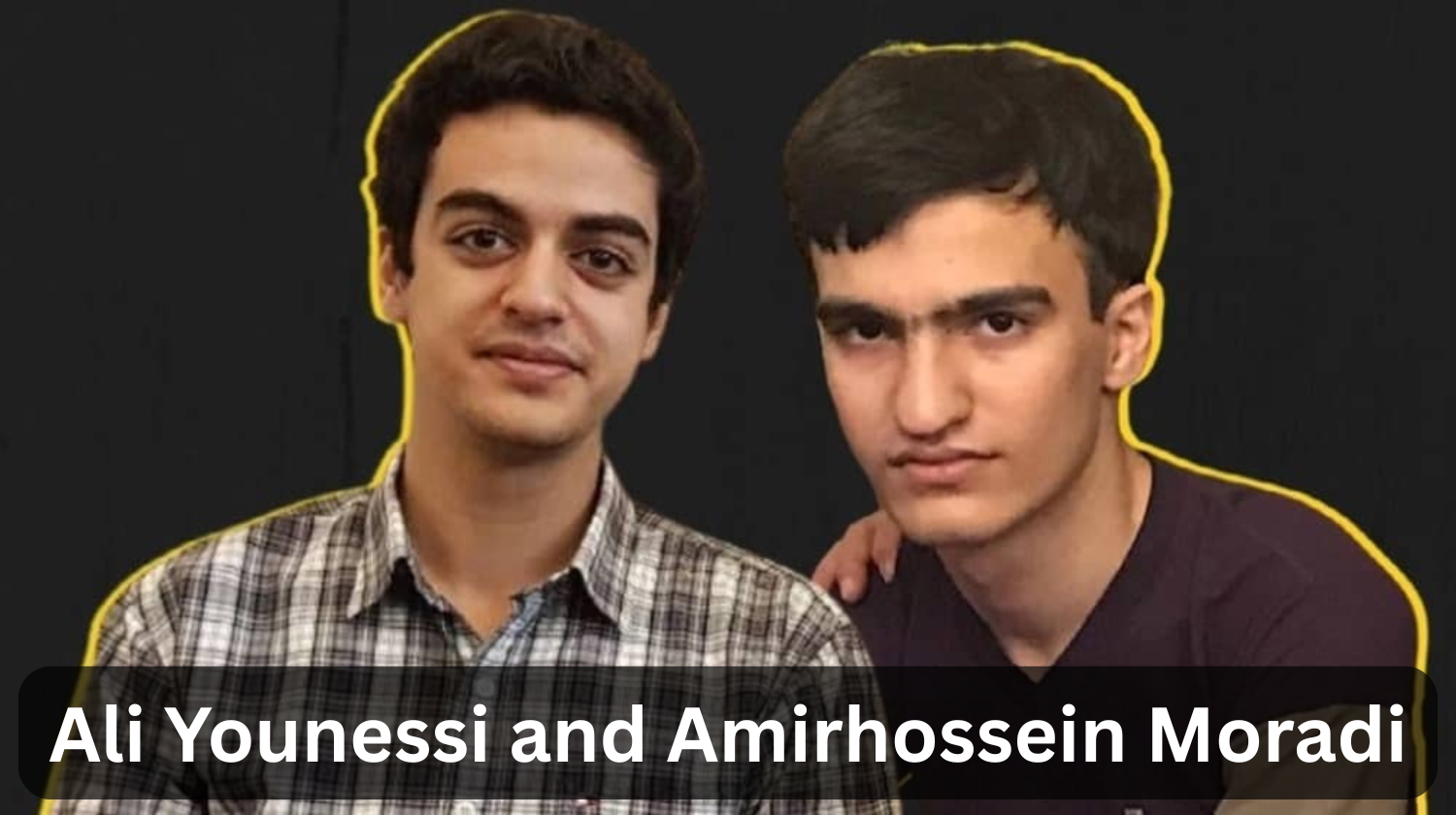
As Iran prepares to open its universities for a new academic year, two young students—Amirhossein Moradi and Ali Younesi—remain imprisoned in Evin Prison, where they have spent more than five years behind bars. In a recent letter shared from their prison cell, they speak not just of their own hardship, but of the continued erosion of academic freedom, the right to education, and the widening humanitarian crisis affecting youth across the country.
Their message is a deeply human reflection on resilience, solidarity, and the struggle for dignity, especially for Iran’s student population who continue to face surveillance, punishment, and imprisonment for peaceful expression.
Two Brilliant Students, Silenced
Amirhossein Moradi and Ali Younesi were both nationally recognized students at Iran’s prestigious Sharif University of Technology. With backgrounds in physics and computer engineering, the two won national and international medals in astronomy and physics competitions—earning their country pride through academic excellence.
In April 2020, they were arrested by security forces in a raid that, according to their families, was conducted without warrants or judicial oversight. Both were allegedly subjected to beatings during their arrest. They were held in solitary confinement for over 800 days before being moved to the general prison population. In 2022, they were sentenced to 16 years in prison each.
A Letter from Prison: Linking Classrooms to Cells
In their letter, written on the eve of the new school year, the students describe the difficult conditions in which university students and academic institutions now operate. They speak of a country where poverty, repression, and a lack of freedom have severely affected access to education and self-expression.
They recall moments in Iran’s recent history when university students stood up for their rights, often at great personal cost. They emphasize how prison cells and classrooms, though worlds apart, have both become places where young people strive to preserve their voice and dignity.
Their words call on fellow students, families, and citizens to remember that freedom of thought and education are not privileges, but rights that must be protected and reclaimed.
The Human Cost of Repression
Amirhossein and Ali’s message reflects a broader pattern of student repression in Iran, particularly in the wake of protests in recent years. Dozens of students have been arrested, expelled, or harassed simply for expressing their views or taking part in peaceful demonstrations.
The psychological toll on young people—combined with economic hardship, lack of educational access, and an atmosphere of fear—has created what international observers have described as a generational crisis.
In this context, the letter from these two students is more than a personal account—it is a testament to the resilience of youth under pressure, and a reminder that human dignity persists even in the darkest of places.
An Appeal for Solidarity
The students write not only to document injustice but also to express solidarity with others who are suffering—with fellow students, with families affected by executions, and with the broader population enduring hardship.
“What links our hands from prison to the university is the shared determination to resist despair,” they write. “If a prison cell can be a place of strength, so can a classroom.”
Their message reminds us that the struggles of imprisoned students are not isolated—they are tied to broader violations of rights to education, freedom of expression, and peaceful assembly, all protected under international human rights law.
Why This Matters
Under the Universal Declaration of Human Rights and the International Covenant on Civil and Political Rights, Iran has obligations to protect:
- The right to education (Article 26 UDHR; Article 13 ICESCR)
- The freedom of thought and expression (Article 19 ICCPR)
- Protection from arbitrary detention and torture (Articles 7 and 9 ICCPR)
Yet, cases like those of Amirhossein Moradi and Ali Younesi demonstrate the ongoing violations of these rights, particularly against youth and students whose only “crime” was academic achievement and peaceful expression.
Our Call as a Human Rights Organization
We stand in solidarity with all individuals, in Iran and elsewhere, who are deprived of their rights to education, freedom, and safety. We call on the international community to:
- Monitor and advocate for the release of prisoners detained for peaceful expression, including students.
- Pressure for transparent investigations into the treatment of detainees and the use of solitary confinement.
- Support Iranian civil society and student groups who work peacefully to uphold education and human rights.
Hope from Behind Bars
Despite years in prison, Amirhossein Moradi and Ali Younesi remain committed to their ideals and to the belief that Iran’s future depends on its students, thinkers, and young leaders. Their letter is not a political statement—it is a deeply human call for justice, dignity, and freedom.
They end with a note of unity and remembrance:
“We stand with all those who have sacrificed for a better future. In their memory—and for those still fighting—we endure.”
Their courage reminds us that even in the most repressive environments, the human spirit and the pursuit of knowledge endure.