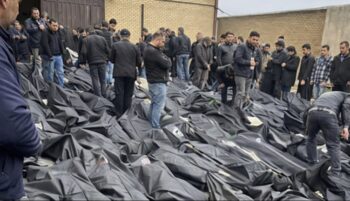
During Iran’s 2026 nationwide uprising, repression extended far beyond shootings in the streets. Evidence from multiple cities shows a coordinated policy aimed not only at suppressing protests, but at ensuring wounded protesters did not survive—and that those killed disappeared without trace.
In Amol, a wounded survivor described how armed men in plain clothes moved among injured protesters on the nights of 8–9 January 2026, firing execution-style shots at those still breathing. He survived only because a passerby rushed him away.
In Babol, a witness at the Goleh-Mahalleh cemetery morgue reported seeing a body bag visibly moving. When families demanded medical help, officers threatened them and stated: “Anyone brought here, even if alive, must stay until they die.” No bodies were released.
Mashhad became a central hub for concealment. At Farabi Hospital, over 1,000 body-release signatures were reportedly issued in a single day without public explanation. Bodies arrived at morgues with breathing tubes and monitoring equipment still attached, indicating patients were alive or unstable at transfer.
At Behesht-e Rezvan Cemetery, large pits were dug for nighttime burials. Around 1,000 protesters were reportedly buried secretly, without registration or family notification. In Neyshabur, families discovered multiple bodies buried together. A local stonemason confirmed an order for 148 gravestones, all for youths aged 16–23.
These uniform practices—executions, denial of care, secret burials, and family intimidation—constitute enforced disappearance and crimes against humanity, carried out through centrally issued orders.